What Size Zero-Turn Do You Need? Deck Sizes by Acreage
Most people buy a wider deck than their property can use. How to match cutting width to your real mowable acreage, gates and obstacles.
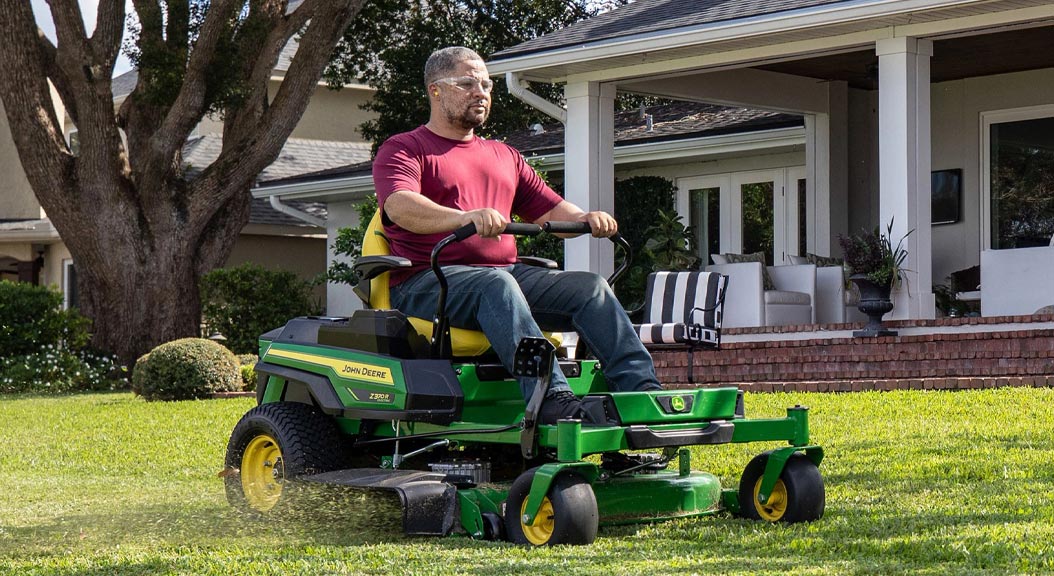
Deck size is the spec people get wrong most often, usually in the same direction: they buy wider than their property can use. A 60-inch deck sounds like it will halve your mowing time, and on open ground it might. On a suburban lot full of trees and beds, it just means you finish the open bits faster and then spend the saved time with a string trimmer.
Here is how to match cutting width to your actual property, what each size is really for, and which machines to look at in each bracket.
First, measure what you actually mow
Not your lot size. Your mowable area. Subtract the house, the driveway, the beds, the wooded corner. Plenty of people with five-acre deeds are cutting two and a half acres of grass.
That number is what sizes your deck. Everything below assumes you have done that subtraction.
The time each size buys you
Roughly, on open ground, a zero-turn covers about an acre in this long:
- 42 inches: 35 to 40 minutes
- 48 to 50 inches: around 30 minutes
- 54 inches: 25 minutes or so
- 60 inches: about 20 minutes
- 72 inches: 15 minutes
Those are clean-condition numbers. Real mowing includes turns, overlap and slowing for obstacles, so knock 20 percent off and you will be closer to the truth.
The gap is real but smaller than people expect. Going from 42 to 60 inches on one flat acre saves roughly 25 minutes a mow. Over a 24-week season that is about ten hours. Worth paying for if you value the time, not worth reshaping your whole purchase around if your yard is full of obstacles.
What limits deck size on a normal property
Three things, and they bite before you think they will.
Gates. A 42-inch mower needs about 44 inches of clear opening, and a standard side gate is 36 to 48 inches. If the only way into the back garden is through a gate, measure it before you shop. This single fact decides more purchases than any spec sheet.
Obstacles. A 60-inch deck cannot fit between trees planted five feet apart, cannot follow a narrow strip along a fence, and scalps more easily near beds. On a dense lot the wide deck creates trimming work that eats the time it saved.
Slopes and storage. Wider decks come on heavier machines that feel less planted on side slopes, and they need a bay deep enough to park in.
Size by size
34 to 36 inches: the gate specialists
A niche that exists for one reason, which is fitting through a standard garden gate. You give up speed on open ground and gain access to places nothing else reaches. The Gravely Compact-Pro 34 is a commercial machine at this width, which tells you it was built for crews working fenced suburban properties rather than as a compromise.
42 inches: under an acre, tight lots
The sweet spot for a small, obstacle-heavy yard. It fits gates, stores easily, and manoeuvres around beds without constant scalping. Most first zero-turns are this size and it is usually the right call. The Cub Cadet ZT1 42 is the popular budget default, the Hustler Dash XD 42 gives you a fabricated deck at a similar price, and the Exmark Quest E-Series 42 buys you a professional brand's cut quality in a small package.
48 to 50 inches: one to two acres
The size most people should buy and often skip past. It is meaningfully faster than 42 inches while still fitting most wider gates and handling a normal suburban layout. The Husqvarna Z248F 48 and Toro TimeCutter 50 both bring fabricated decks at homeowner prices, and the Ferris 400S 48 adds real suspension if your ground is rough.
54 inches: two to three acres
The most common size across the whole industry, and every brand builds one. It covers a few acres quickly without becoming unwieldy, which is why it shows up in so many driveways. If your property is open with a handful of obstacles, this is the default answer.
60 to 61 inches: three acres and up
Now you are into acreage territory, where the width pays for itself every week. It needs open ground to be worth having. The Gravely ZT HD 60 and Ariens IKON XD 60 both give you a fabricated deck at this width for homeowner money. Note that Spartan and a few others build 61-inch decks rather than 60, which is the same idea with an inch of margin.
66 to 72 inches: large properties and professionals
Commercial and estate territory. A 72-inch deck cuts a six-foot swath and clears ground genuinely fast, but it demands open, mostly flat land and a machine built to carry it. The Swisher Response Gen 2 66 is an unusually affordable way to get this width for a big home property, while the Grasshopper 400D 72 is what a groundskeeper buys when fuel and hours are line items.
A rule of thumb worth trusting
- Under 1 acre: 34 to 42 inches
- 1 to 3 acres: 42 to 54 inches
- 3 to 5 acres: 54 to 60 inches
- 5 acres and up: 60 to 72 inches, and start looking at commercial-grade build
Two adjustments. If your lot is dense with trees, beds and fences, go one size down from the bracket. If it is wide open with almost nothing in the way, go one size up.
Deck size is not the whole spec
A wide deck on a weak machine is a bad trade. The engine has to turn those blades through thick grass, and the frame has to keep a six-foot deck level over uneven ground, which is why big decks come with fabricated steel and heavier frames on serious machines. Buying a 60-inch deck on a stamped-deck budget mower usually means a mower that struggles rather than one that finishes early.
The transmission matters just as much, and our guide on how to choose a zero-turn covers the serviceable-versus-sealed question in detail. If you are shopping electric, deck width also eats battery range, which we cover in electric versus gas.
The bottom line
Measure your gate, measure your mowable acreage, count your obstacles. Those three numbers point at a deck size more reliably than any brochure. Then pick the best-built machine you can afford in that width, rather than the widest deck your budget stretches to.
Our mower finder works through this in a few questions, or you can browse every model we have reviewed filtered by deck size, with full specs and a ZT Score for each.