How to Choose a Zero-Turn Mower: Size, Slopes & Reliability
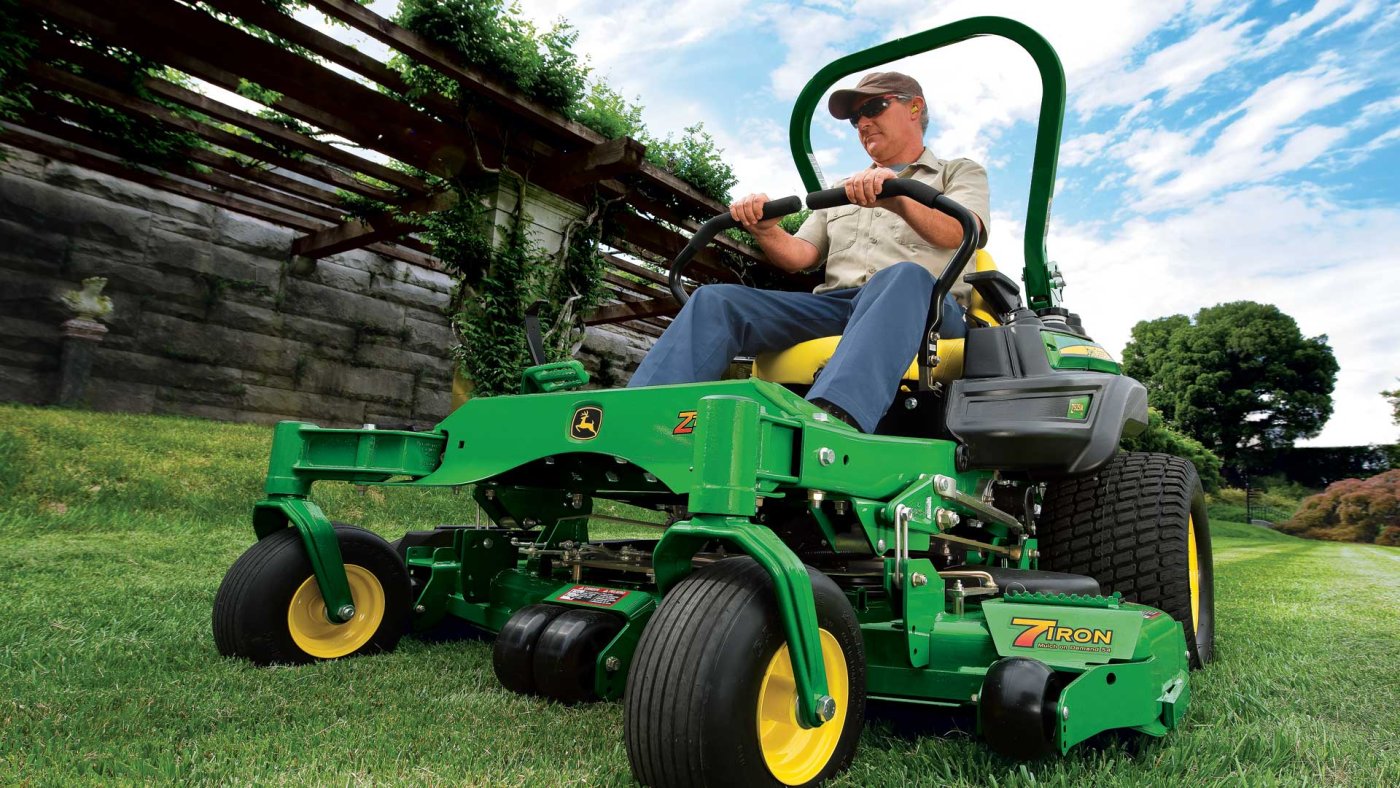
A zero-turn is a big purchase, and most of the buying advice online quietly steers you toward more mower than you need. Bigger deck, more horsepower, more machine. It sells well. It's often wrong.
The truth is that the right zero-turn is decided almost entirely by your yard — its size, its shape, its slopes and its gates — not by the spec that looks most impressive in the brochure. Get those four things right and a mid-priced machine will serve you brilliantly for a decade. Get them wrong and no amount of horsepower will stop you resenting it every weekend.
Here's how to actually choose.
Start with your yard, not the mower
Before you look at a single model, measure two things: how much grass you actually cut, and what's in the way.
The first is not the same as your lot size. A five-acre property might be three acres of grass, with the rest house, driveway and trees. Walk it, or pull it up on a free satellite measuring tool, and get the real mowed area.
The second matters just as much and is almost always overlooked: count your obstacles. Trees, beds, fences, the swing set, the narrow gap beside the shed. A wide-open acre and a cluttered acre call for different machines, even though the acreage is identical.
Everything below flows from those two numbers.
Deck size: bigger is not better
The deck is the cutting width, and it's the spec people most often get wrong. Here's the honest starting point, matched to the grass you actually mow:
- Under 1 acre — a 42 to 48-inch deck. Nimble, easy to store, easy to trailer.
- 1 to 3 acres — a 48 to 54-inch deck. This is the sweet spot for the vast majority of homeowners, and where most residential models live.
- 3 acres and up — a 54 to 60-inch deck, where the extra width finally pays off on open ground.
Now the part the size chart doesn't tell you: obstacles beat acreage every time. A cluttered one-acre lot with mature trees is better served by a smaller, more agile deck than the raw acreage suggests. Go too wide and a bigger deck actively creates problems — you scalp uneven ground, you leave uncut grass around every obstacle that you then have to trim by hand, and you spend more time reversing and repositioning than you ever save in cutting width.
There's a hard physical limit too. A wide deck means a wide machine. A 60-inch zero-turn typically measures 70 to 76 inches across overall. That will not fit through a standard six-foot gate, a narrow shed door, or in some cases even a standard enclosed trailer. Measure every gate and doorway the mower has to pass through *before* you buy, not after.
The time savings are real but they shrink on cluttered ground. On open lawn, going from a 42-inch to a 54-inch deck cuts your number of passes by roughly a fifth. But trim work doesn't scale with deck width — so the more obstacles you have, the less that wider deck actually helps.
Match the engine to the deck, not to your ego
Horsepower is the other number buyers over-spend on, but here it works in reverse: too little is a real problem. A bigger deck needs more power to keep the blades spinning at full speed through thick grass.
As a rough guide, a 54-inch residential zero-turn wants around 22 to 24 HP; a 60-inch machine wants 27 HP or more. Under-power a deck and the engine bogs down in heavy grass, which leaves a ragged, uneven cut and shortens engine life. But going far beyond what your deck needs just burns more fuel and adds cost for nothing. Pair the engine to the deck and stop there.
The slope question is about safety, not preference
If any part of your property is a real slope, read this carefully, because it changes what you should buy.
On a hill, a zero-turn is the least safe riding mower you can be on. That sounds backwards, so here's why. A zero-turn steers by driving its two rear wheels at different speeds. On a slope, when a rear wheel loses grip, you don't just lose traction — you lose steering. At that point you're a passenger on a machine sliding sideways, and most zero-turns have no foot brake to save you: you stop using the same two levers you steer with.
The numbers that matter:
- 15 degrees is the manufacturers' hard ceiling. Toro states it plainly — never mow a zero-turn on a slope steeper than that. Most other makers say the same.
- Wider decks make it worse. The wider the cutting width, the harder it is to keep the whole deck in even contact with changing ground, so a 60-inch deck will scalp and slip on a hill where a 48-inch deck copes. If you have slopes, size down.
- To picture 15 degrees: about a five-foot rise over a twenty-foot run.
If you have meaningful slopes, the rules are not optional: mow up and down the hill rather than across it, always turn uphill, cut only when the grass is dry, and use the rollover bar with the seatbelt fastened. And if a slope is simply too steep to mow safely, landscape it — beds, groundcover or mulch. It's only grass, and no mower is worth a rollover.
We cover the full slope-safety picture, including how lawn tractors compare, in our guide to zero-turns versus lawn tractors.
What actually breaks: the spec that decides longevity
Two mowers with identical decks and engines can be a decade apart in lifespan. The difference is usually in three parts the brochure barely mentions.
The transmission is the one that matters most
This is the single most important durability spec, and it's the one buyers most often ignore. The entry-level sealed transaxle fitted to many cheap zero-turns — the Hydro-Gear EZT is the common one — has no serviceable fluid and can't be rebuilt. Owners commonly report them weakening somewhere around the 250-hour mark. On one flat acre a week, that's many seasons away and you may never meet it. On three acres of rough ground, it's a countdown.
Step up to a serviceable transaxle — Hydro-Gear ZT-2800, ZT-3100, ZT-3400 or a commercial hydraulic drive like Parker's — and you own a machine you can maintain instead of replace. If you're deciding where the last few hundred dollars of your budget should go, put it here, not into extra horsepower.
The deck: stamped versus fabricated
A stamped deck is pressed from a single sheet of thinner steel. It's lighter, cheaper and fine for smaller residential lots. A fabricated deck is welded together from multiple pieces of heavy-gauge steel — usually 10 or 11 gauge — making it thicker, far more durable and much better on rough or uneven ground. If you're mowing real acreage or bumpy terrain, a fabricated deck is worth paying for.
Spindles and belts
The deck spindles house the bearings the blades spin on. Sealed, maintenance-free spindles are convenient; greasable ones let you service them and last longer. Either is fine — just know which you're getting. Belts are a genuine wear item on any mower and will need replacing periodically, so check that they're a common size you can actually source.
One recurring owner complaint worth knowing: some decks pack clippings on top and need periodic cleaning to keep cutting cleanly. It's a maintenance chore, not a design flaw — but it's real, and a built-in deck wash port makes it far less of a nuisance.
A five-question checklist before you buy
- How much grass do I actually mow? That sets your deck-size range — not your total lot size.
- How cluttered is it? Lots of obstacles → size down for agility and less trimming.
- Will it fit through my gates and into my shed? Measure every opening before you buy.
- Any slopes over about 10 degrees? Size the deck down, and revisit the whole plan above 15 degrees.
- Can my budget reach a serviceable transmission and a fabricated deck? That's what decides whether you're still mowing with this machine in ten years.
The bottom line
The best zero-turn for you is almost never the biggest or the most powerful one. It's the one sized to the grass you actually cut, agile enough for your obstacles, narrow enough for your gates, safe for your slopes, and built around a transmission and deck that will outlast the payments.
Nail those, and the badge on the hood matters far less than the salesman would like you to believe.
Ready to shortlist? Our mower finder matches you to the right machine in four questions, or you can browse every model we've reviewed with its full specs and ZT Score.