Diesel vs Gas Zero-Turn Mowers: When Does Diesel Make Sense?
A practical ownership checklist for choosing diesel or gas: compare the complete mowing job, annual use, local service and costs you can actually verify.
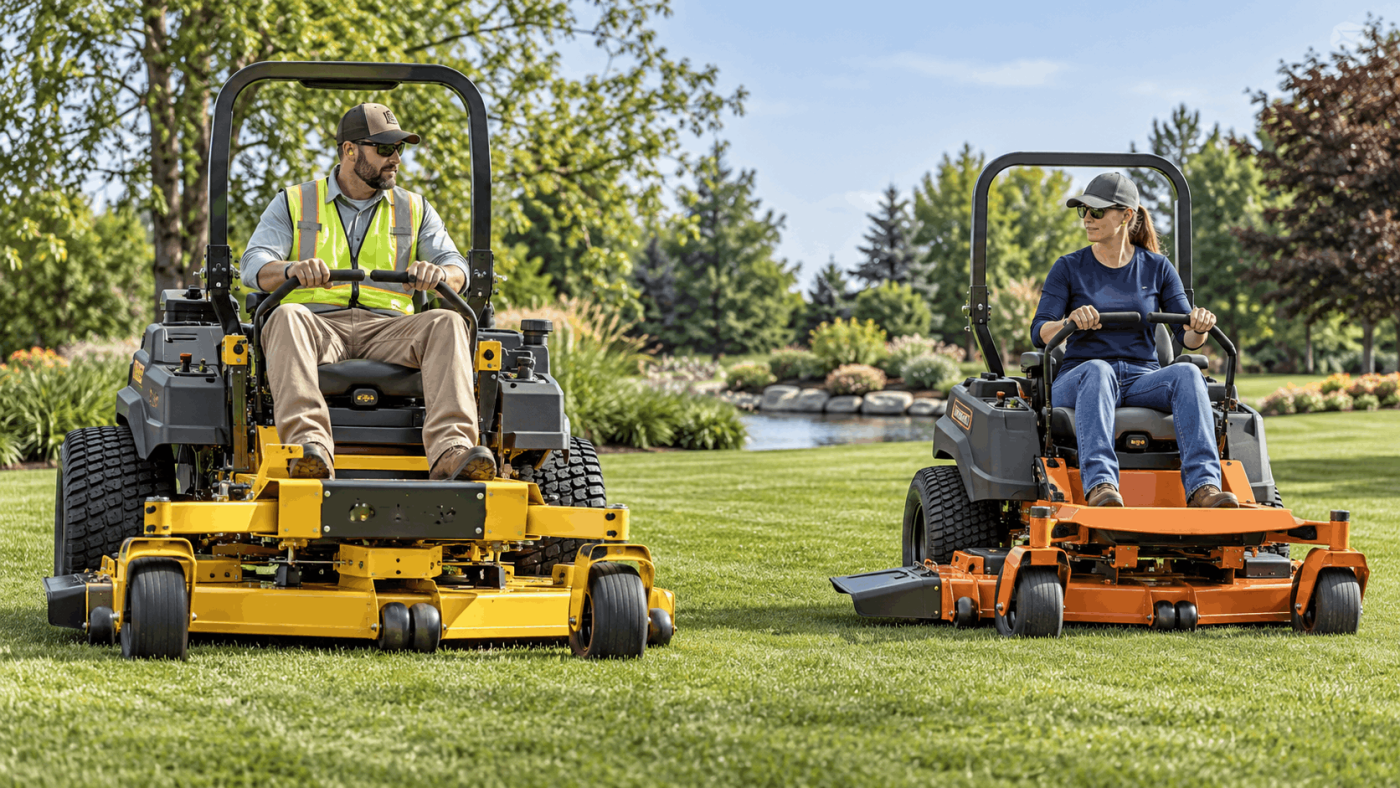
A diesel zero-turn makes sense when the complete mower fits the job and its ownership costs work at your actual annual use. Fuel type alone cannot establish that. Start with the work you need completed, then compare a suitable gas machine and diesel machine under the same assumptions.
This guide is for property owners and commercial operators in the United States and Canada considering that decision. It does not assume a fixed diesel fuel saving or predict engine life from a badge.
Start with hours, not acreage alone
Record the hours your current mower accumulates over a representative season. Separate mowing, idling, travel and time spent dealing with access restrictions where possible. A large property maintained occasionally can produce a very different annual workload from a smaller collection of properties cut repeatedly.
Use your own season length. A Canadian operation with a short mowing season should not borrow a year-round contractor's utilization estimate, and a busy US route should not substitute a homeowner's weekly schedule. If you are expanding, keep confirmed work separate from work you hope to win.
There is no universal hour threshold at which diesel becomes the right purchase. The premium, work rate, service costs and local support all change the answer.
Compare the job before comparing the engines
A fuel comparison becomes misleading when the machines solve different problems. The Toro 7500-D 60 uses rear discharge; the Ferris IS 6200 72 is a wider machine. Their results would reflect deck layout, access and operating pace as well as engine choice.
Pick a gas alternative that can perform the same work to your required standard. Use the same grass area, starting condition and finish target for a demonstration. Record total job time, including turns and cleanup. Include any areas requiring a second machine.
Do not divide advertised horsepower by purchase price and call the result value. Engine ratings use specified test conditions, while the mower must turn blades, drive and operate its other systems in the real job. Manufacturer maximum travel speed also does not guarantee an acceptable cut at that speed.
Build an ownership worksheet in one currency
Obtain itemized delivered quotes. Include the selected deck, accessories, delivery and applicable charges consistently. For a Canadian purchase, use Canadian quotes and locally available support rather than simply converting a US advertised price.
Write down these inputs for each candidate:
- Delivered purchase cost for the actual configuration.
- Annual hours or completed jobs based on your records.
- Fuel consumed per comparable job, when measured reliably.
- Local fuel price, using consistent volume units.
- Scheduled parts, fluids, labor and transport to service.
- Expected ownership period and a separately identified resale assumption.
Fuel cost per job is fuel used for that job multiplied by the price per unit. Keep US gallons, imperial gallons and litres separate; using the wrong gallon can undermine an otherwise careful comparison.
If you have no credible consumption data, leave the fuel saving unknown. Ask for a documented demonstration rather than filling the gap with a percentage from another machine. Similarly, an advertised tank capacity describes storage, not efficiency.
A simple payback calculation is only useful when the extra purchase cost and annual operating savings are defensible. If projected savings disappear when fuel prices or annual hours change modestly, the purchase needs another clear operational reason. Avoid counting a hoped-for resale premium as a guaranteed return.
Service arrangements can decide the shortlist
Ask the dealer to walk through the serial-specific maintenance schedule and price routine service for your expected use. Check engine, cooling, fuel, hydraulic and deck requirements individually. Diesel does not remove the rest of the mower's maintenance needs.
The Kubota ZD1021-60 illustrates why component labels matter: its manufacturer brochure describes a shaft-drive PTO while also listing a deck belt. A shaft-driven machine is not automatically belt-free.
The Ferris IS 2600 provides another practical comparison: ask the dealer to demonstrate access for the tasks you would actually perform. Confirm local parts support, transportation arrangements and the process when the mower needs workshop attention during your busy season.
Our maintenance overview can help organize questions, but the supplied operator and engine manuals determine the actual products and intervals. For winter storage or cold-weather use, follow those manuals and local fuel guidance rather than assuming every diesel requires the same treatment.
Read warranty limits against your hours
Years and hours need to be considered together. A long headline can have a very different meaning for occasional use and a busy contractor. Identify machine coverage, engine coverage and any separate component terms; ask which document governs the supplied configuration in your country.
Warranty duration is not an expected service life. Nor should a manufacturer's longevity comparison be treated as a guarantee that your diesel will last a certain multiple of a gas mower. Maintenance records and comparable operating evidence are more useful than an unsupported universal rule.
Make the decision from the strongest evidence
Diesel deserves serious consideration when you have sustained work, a suitable machine, credible running-cost information and support that fits your operation. A good gas mower remains a reasonable choice when it completes the job satisfactorily and the diesel premium has no demonstrated benefit.
Before ordering, require three things: a satisfactory representative demonstration, an itemized quote and a service plan you can carry out. Those checks answer more than a generic ranking of fuel types.
Research basis: official model documentation from Toro, Ferris IS 2600, Ferris IS 6200 and Kubota, checked October 7, 2026. The worksheet is an editorial decision method, not a measured cost comparison or a promise of savings.