Zero-Turn Mower Maintenance: The Complete Hour-by-Hour Schedule
What to service and when, based on engine hours rather than the calendar. Blades, oil, hydrostatic fluid, deck cleaning and winter storage, done safely.
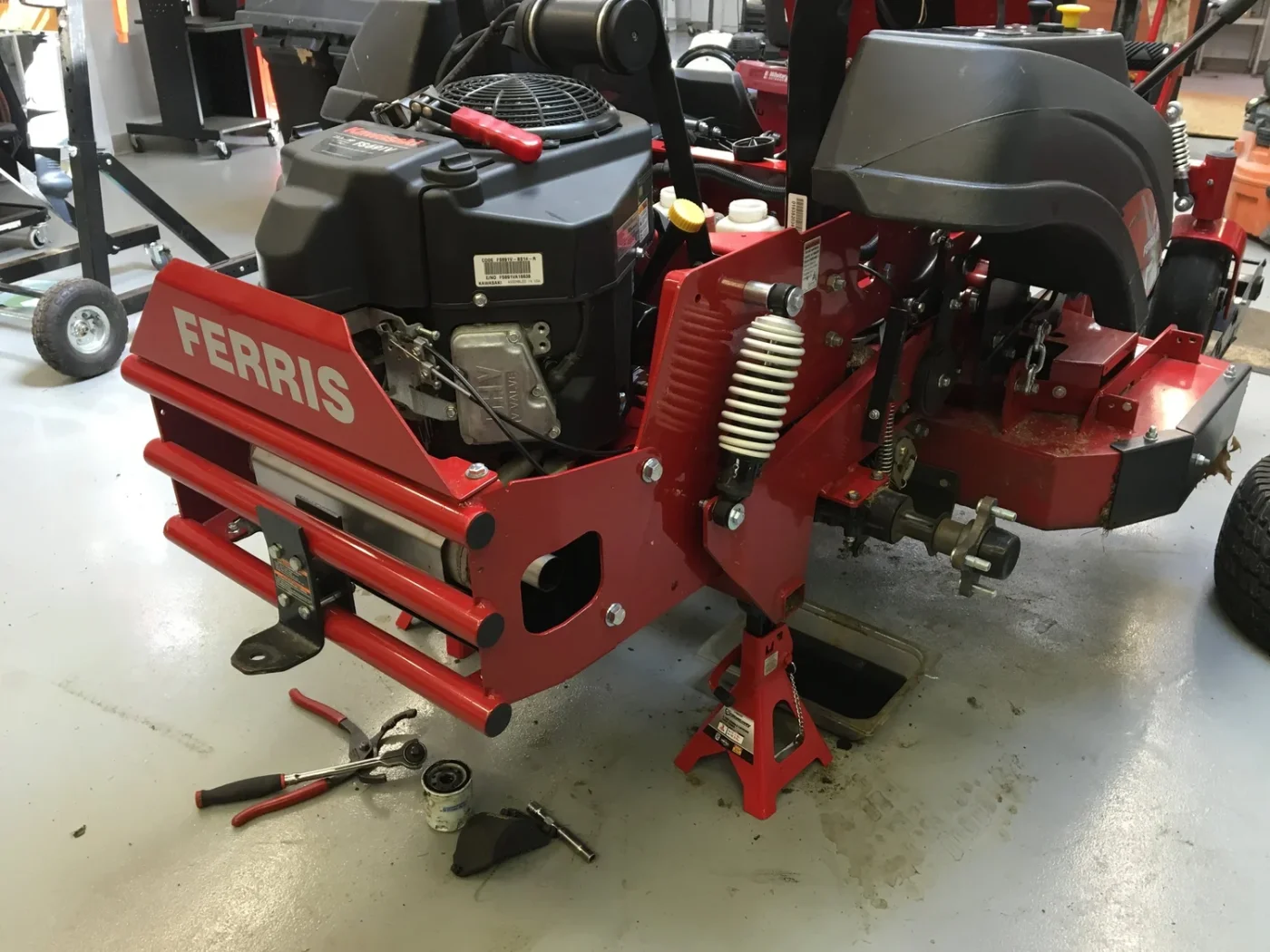
A zero-turn mower is a serious piece of equipment, and the difference between one that lasts fifteen years and one that dies at year five is almost always maintenance. The good news is that most of it is simple, and almost all of it runs on a clock you can actually track: engine hours, not calendar months.
This guide lays out what to do and when, based on the hour meter your mower already has. Most of it you can do yourself in a driveway with basic tools.
Why hours, not months
Wear happens while the machine runs, not while it sits. Bearings wear from spinning, oil breaks down from heat, hydro fluid degrades under pressure, and blades dull from hitting grass. All of it accumulates by operating hours, which is why every schedule below is measured that way.
To translate hours into your calendar, note how long one mow takes. If it takes you an hour to cut your lawn and you mow weekly, you rack up 25 to 30 hours a season. A commercial crew running eight-hour days hits that in a single week, which is why the same mower needs far more frequent service in professional use.
If your mower does not show hours, a cheap clip-on hour meter solves that for about fifteen dollars.
Before you touch anything: safety
This matters more on a zero-turn than a push mower, because you will be working near heavy blades and often under a raised deck.
- Park on level ground, set the brake, and remove the key.
- Disconnect the spark plug wire before any work near the blades. On a battery machine, pull the safety key and the battery.
- Let the engine cool for at least ten minutes. The exhaust gets hot enough to burn.
- If you need to get under the deck, use ramps or a proper jack with stands. Never trust a jack alone, and never put a hand into a spot you cannot see.
None of this is optional. A blade can turn far enough to take a finger even with the engine off.
Every use, or every few hours
These are the quick habits that prevent most expensive failures:
- Glance under the deck for packed grass and knock off the loose stuff.
- Check the tyre pressures. Uneven pressure tilts the deck and gives you a stepped, uneven cut, and it is the single most common reason a mower "won't cut level."
- Look over the blades for dents, cracks or a rolled edge.
- Clear clippings off the engine's cooling fins and intake screen. A mower that runs hot is often just a mower caked in grass.
Every 25 hours: blades and greasing
Sharpen the blades. For a homeowner, every 20 to 25 hours is the sweet spot, which usually works out to once or twice a season. If you mow sandy soil, thick growth, or a yard with sticks and exposed roots, move that sooner. A commercial operator sharpens far more often, sometimes daily, and keeps spare sets in rotation.
You can tell a blade has gone dull without a clock. Dull blades tear grass instead of slicing it, leaving ragged, pale tips that turn brown a day or two after you mow, and often a thin uncut strip between passes. Torn grass also invites lawn disease, so this is about turf health as much as tidiness.
Grease the fittings. If your mower has grease zerks on the spindles and caster wheels, hit them on this interval. Sealed, maintenance-free spindles skip this step, which is one of the quiet perks of the pricier machines.
Every 50 hours: engine oil
Change the engine oil and filter. The first change is the important one: most engines want an early break-in change somewhere between 5 and 50 hours depending on the brand, because fresh internals shed metal as they wear in. After that, every 50 hours or once a season is a safe rhythm for most air-cooled twins.
Use the grade the engine maker specifies, which is printed in the engine manual that came separately from the mower manual. When the two disagree, follow the engine maker for oil.
Every 100 hours: filters and plugs
- Replace the air filter element. A clogged air filter starves the engine and is a common cause of a mower that bogs down or loses power in thick grass.
- Check the spark plug's condition and gap, and replace it if it looks worn or fouled.
- Replace the fuel filter.
- Inspect the belts and pulleys for cracks, glazing or fraying.
The one that gets ignored: hydrostatic fluid
This is the system that makes a zero-turn a zero-turn, and it is the most expensive thing to replace when neglected. Two things you need to know.
First, find out if yours can even be serviced. Cheaper residential zero-turns use sealed transaxles, often an EZT-style unit, that are designed to run for their life with no fluid change and simply be replaced when they wear out. There are no drain plugs and no filter to change. This is exactly why the transmission is worth checking before you buy, and it is a point we make in how to choose a zero-turn: a serviceable transaxle outlasts a sealed one by years.
Second, if yours is serviceable, service it. Commercial-grade units from Hydro-Gear, Parker, Tuff Torq and the like usually call for an early break-in change around 75 to 100 hours, then a fresh change with a new filter roughly every 400 to 500 hours after that. The fluid runs hot, often past 180°F, and heat is what breaks it down into the varnish that kills a pump.
A few rules that save transmissions:
- Use the exact fluid the manual specifies. Many accept 20W-50, some demand a proprietary synthetic, and mixing types is asking for trouble.
- Never substitute automotive transmission fluid. It is not the same thing.
- After a change, bleed the air out by jacking the rear, disengaging the drive, and cycling the steering levers back and forth several times. Skip this and the mower will feel weak and spongy until the air works out.
If a serviceable machine calls for it, an annual hydro service is cheap insurance against a repair that can run into four figures.
Cleaning the deck the right way
A clean deck cuts better and lasts longer. The underside is a sealed chamber that pulls grass upright before the blade slices it, and a hardened crust of old clippings kills that airflow, so the mower starts tearing grass instead. Left long enough, trapped wet clippings rust a steel deck out entirely, and a new deck can cost more than half the price of a new mower.
The safe method, after the spark plug is disconnected:
- Deck wash port. Most modern riding mowers have a hose fitting on top of the deck. Connect a garden hose, engage the blades with the deck over grass, and let it rinse itself. It is the easiest way and needs no lifting. Works best right after mowing, before clippings dry.
- Scraping. For hardened buildup, get under the raised, secured deck and use a plastic scraper or a wood block, working from the centre spindle outward. Avoid metal scrapers, which gouge the coating and speed up rust.
- Never use a pressure washer. High pressure forces water past bearings, seals and into electrical connections, and quietly ruins them. A normal garden hose is plenty.
Once it is dry, a light coat of a silicone or graphite deck spray on the underside slows the next buildup. Keep it off the belt.
End of season: storage
How you put the mower away in autumn decides how spring goes.
- Deal with the fuel. Either run the tank dry or add fuel stabiliser and run the engine a few minutes to pull treated fuel through the carburettor. Untreated gas left over winter gums up a carburettor, which is the number one reason a mower won't start in spring.
- Change the engine oil before storage, not after, so the engine sits on clean oil instead of acidic used oil all winter.
- Clean the deck and the cooling fins, and touch up any bare metal to hold off rust.
- Pull the battery, store it somewhere that does not freeze, and keep it on a maintainer if you can.
- Grease the pivot and caster points, and store it under cover.
The short version
Most of a zero-turn's life comes down to a handful of habits: keep the blades sharp, keep the oil fresh, find out whether your transmission is serviceable and act on the answer, keep the deck clean, and store it properly for winter. Do those and one of these machines will outlast the payments several times over.
If you are still shopping and want a machine that is easy to live with, our mower finder narrows it down in a few questions, or you can browse everything we have reviewed with full specs and its ZT Score.