Zero-Turn Mower Brands: Who Owns What (2026 Guide)
Twenty-four badges, but only four corporate families own half of them. Who owns what, whether it matters, and how to narrow the list down to a shortlist.
Walk into a dealership and the badges look like twenty separate companies competing for your money. Several of them are the same company.
That is not a scandal, and it does not make any of these machines worse. But knowing who owns what changes how you shop, because cross-shopping two brands that share a parent and a factory is not the comparison you think it is.
Here is who owns what, what each brand is actually good at, and how to narrow twenty-four names down to a shortlist.
The short version
- Four corporate families own about half the brands on this page. The rest are independent, and a few are still family-run.
- Ownership matters less than you would expect for build quality. It matters a lot for parts and dealer support.
- The useful sorting is not by badge. It is by whether a machine is built for a homeowner, a serious property owner, or someone who mows for a living.
Who owns what
Stanley Black & Decker
The biggest surprise for most buyers. In 2021 Stanley Black & Decker bought MTD Holdings for $1.6 billion and Excel Industries for another $375 million. That put four familiar names under one roof:
Worth knowing if you were planning to cross-shop a Cub Cadet against a Troy-Bilt as though they were rivals.
The Toro Company
Toro has been building mowers since 1914 and bought Exmark in 1997. The two lines stay deliberately separate, with Exmark aimed squarely at landscape contractors and Toro covering everything from a homeowner TimeCutter up to the commercial Z Master. Different decks, different dealers in many markets, same parent.
Briggs & Stratton
Better known for engines, Briggs also owns Simplicity Manufacturing, which brings Ferris and Snapper Pro into the same family. This one has a practical consequence: Ferris and Snapper Pro machines come out of the same plant, and the Snapper Pro S200XT is close kin to a Ferris that costs noticeably more.
Ariens Company
Family-founded in Brillion, Wisconsin in 1933, Ariens bought Gravely in 1982 and has kept the two positioned apart ever since. Ariens machines lean homeowner and prosumer. Gravely leans commercial, with a heritage in professional turf equipment going back to 1916.
The independents
Plenty of good brands answer to nobody in particular:
- John Deere, still its own company since 1837
- Kubota, the Japanese equipment maker
- Husqvarna, part of the Swedish Husqvarna Group
- Scag, built by Metalcraft of Mayville
- Grasshopper, family-owned in Moundridge, Kansas
- Country Clipper, built by Shivvers in Corydon, Iowa
- Dixie Chopper, out of Coatesville, Indiana since 1980
- Altoz, from Greenbush, Minnesota
- Bad Boy and Spartan, both built in Batesville, Arkansas
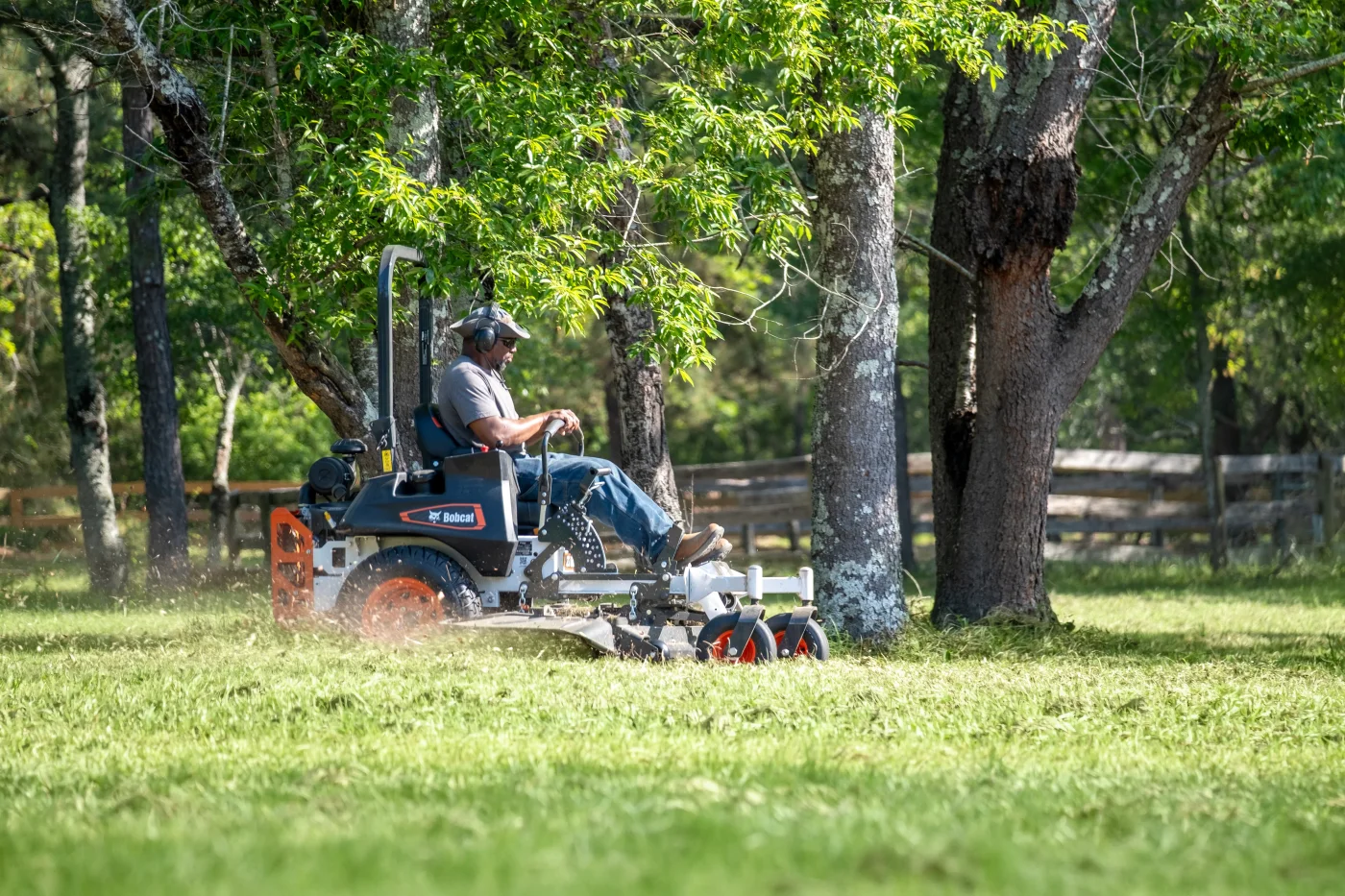
- Bobcat, the skid-steer company, which also builds mowers
Does the parent company actually matter?
Less than the internet suggests, with two exceptions.
It rarely tells you about quality. Cub Cadet and Troy-Bilt share an owner, but a Cub Cadet Ultima and a Troy-Bilt Mustang are built to different specs and priced apart. Judge the machine in front of you, not the logo behind it.
It does tell you about parts and support. A brand inside a large group usually has deeper parts availability and a wider dealer network, which is what you actually care about in year six when something breaks. A small independent may build a superb machine and still leave you waiting on a spindle.
And it explains some pricing oddities. When two brands share a plant, the cheaper badge is often the better buy. Snapper Pro against Ferris is the clearest example in this catalog.
Brand by brand, and what each is for
Best for a normal suburban lawn
Toro and Husqvarna are the safe picks, with wide availability and strong dealer coverage. Cub Cadet is the value play, regularly fitting commercial-grade engines and fabricated decks at prices its rivals reserve for lesser hardware. Troy-Bilt and Craftsman sit at the budget end, where you accept a stamped deck and an entry-level transmission in exchange for a lower price.
Best if you want to buy once
Ariens, Kubota and John Deere all build machines aimed at owners who plan to keep them. Ariens backs deck shells and frames for life on some models. Kubota fits rollover protection as standard and writes some of the longest warranties in the category. Deere charges more for parts but has a dealer on more corners than anyone.
Best for real acreage or professional work
Scag, Exmark, Gravely and Ferris are the names you see on contractor trailers. Exmark has been the most-used commercial zero-turn for three decades. Scag builds possibly the toughest machine here. Ferris is the comfort choice, with genuine full suspension. Snapper Pro undercuts most of them on price while sharing Ferris hardware.
Best if you like a big engine and a loud paint job
Bad Boy, Spartan, Dixie Chopper and Hustler all lean into power and speed. Dixie Chopper's Eagle HP runs to 18 mph. Hustler's Super Z pairs 35 horsepower with a five-year warranty. None of this is subtle, and on big open ground it works.
Best for awkward properties
Altoz builds tracked zero-turns for slopes and soft ground where wheeled machines slide or rut. Country Clipper offers joystick steering and a deck that flips upright for blade changes. Grasshopper is the diesel option when fuel bills are a line item.
Best if you are done with petrol
EGO leads the battery field and backs its batteries for five years, which removes the scariest part of going electric. Ryobi is the cheapest way in and fits through a standard gate. Greenworks sits between them and adds a cargo bed. All three run out of charge before they run out of grass on big acreage, so be honest about your yard size.
So which brand should you buy?
Pick the machine, not the badge. The badge only decides three things that matter: who stocks the parts, how far you drive for service, and whether the warranty is worth the paper.
A better order of operations:
- Size the deck to your yard, not to the price. Our guide on how to choose a zero-turn covers this properly.
- Check the transmission. A serviceable transaxle outlasts a sealed one by years, and this single spec separates brands more meaningfully than any logo.
- Find out who services it near you. A brilliant mower with the nearest dealer two hours away is a worse machine than a good one with a dealer in town.
- Then look at the badge, mostly to understand what you are paying for.
The bottom line
Twenty-four brands sounds like twenty-four choices. In practice you are choosing between four corporate families and a handful of independents, and the real decision is about how much machine your property needs.
If you are shopping now, our mower finder narrows it in four questions, or you can browse every model we have reviewed with full specs and its ZT Score. If your budget tops out around four thousand dollars, start with our ranked picks under $4,000.